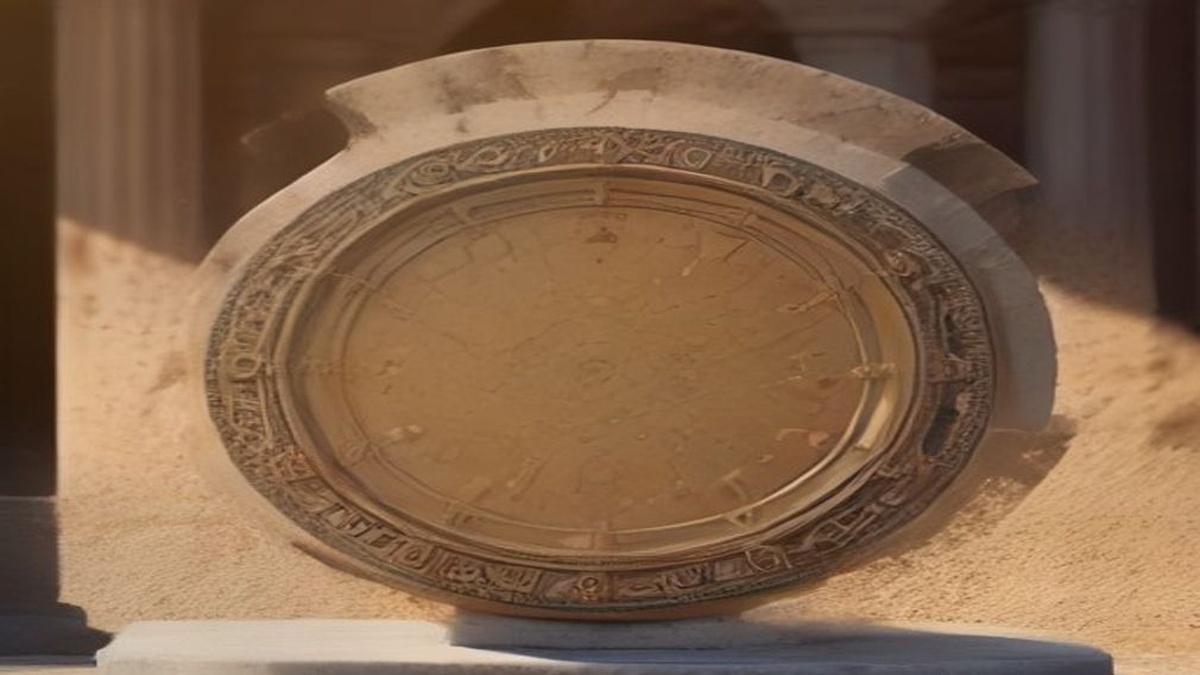
The calendar that governs the international community today—with its twelve familiar months from January to December—did not emerge fully formed. It is the hard-won product of eight centuries of Roman experimentation, religious superstition, political manipulation, and astronomical failure. From a primitive ten-month pastoral lunar calendar instituted by Romulus to the chaotic 445-day ‘Year of Confusion’ engineered by Julius Caesar in 46 BCE, the story of Roman timekeeping is a gripping chronicle of how the classical world struggled to align human law with the heavens.
Executive Historical Summary
- The Romulean Calendar (753 BCE): Only 10 months and 304 days; commenced in March (Martius) and completely ignored the uncultivated winter period as dormant, uncounted days.
- The Pompilian Reform (713 BCE): King Numa Pompilius added January (Ianuarius) and February (Februarius) to reach 355 days, governed by Pythagorean superstition favoring odd numbers.
- Political Corruption of Mercedonius: An intercalary month (Mercedonius) was supposed to be inserted every two years, but pontiffs manipulated it for electoral bribes and debt collection.
- The Annus Confusionis (46 BCE): Caesar forced 445 days into a single transition year to realign seasons, launching the 365.25-day Julian calendar on January 1, 45 BCE.
Table of Contents
- 1. The 10-Month Calendar of Romulus: When Winter Had No Name
- 2. Numa Pompilius: Adding January, February, and Odd-Number Superstitions
- 3. Roman Date Reckoning: Kalends, Nones, and Ides
- 4. Mercedonius and the Corrupt Pontifices
- 5. The 445-Day ‘Year of Confusion’ (46 BCE)
- 6. The Julian Reformation and the Renaming of Quintilis & Sextilis
- 7. Frequently Asked Questions (FAQ)
- 8. Conclusion & The Enduring Roman Stamp on Time
1. The 10-Month Calendar of Romulus: When Winter Had No Name
According to Roman tradition, Rome’s founder and first king, Romulus, instituted a calendar around 753 BCE designed purely for an agrarian and martial society. The year began in spring with the month of Martius (dedicated to Mars, god of war and agricultural fertility) and concluded with December (the tenth month, from Latin decem).
The original ten months were:
- Martius (31 days)
- Aprilis (30 days)
- Maius (31 days)
- Iunius (30 days)
- Quintilis (31 days – Fifth month)
- Sextilis (30 days – Sixth month)
- September (30 days – Seventh month)
- October (31 days – Eighth month)
- November (30 days – Ninth month)
- December (30 days – Tenth month)
This yielded a total of only 304 days. What occurred during the remaining 61 days? To modern minds, uncounted time seems inconceivable, but to early Roman farmers, the dead of winter was an uncultivated, dormant period between agricultural harvest and the return of spring campaigns. Winter had no months, no names, and no legal dates.
2. Numa Pompilius: Adding January, February, and Odd-Number Superstitions
Rome’s second king, the legendary lawgiver Numa Pompilius (reigned c. 715–673 BCE), sought to civilize Rome through religious institutions. Numa reorganized the calendar to reflect a 355-day lunar year by introducing two new months: Ianuarius (dedicated to Janus, two-faced god of beginnings and doorways) and Februarius (from februa, the rites of purification).
Roman culture was dominated by Pythagorean numerology, which held that odd numbers were lucky and fortunate, while even numbers were unlucky. Numa deliberately engineered month lengths to end in odd numbers (29 or 31 days). However, mathematical necessity dictated that a 355-day year must contain at least one even month. Numa assigned this unlucky 28-day fate to February, designating it as the month of purification, penance, and underworld rites.
3. Roman Date Reckoning: Kalends, Nones, and Ides
Unlike modern calendars which count days sequentially from 1 to 30, the Romans counted backward from three sacred monthly reference points:
- Kalends (Kalendae): The 1st of every month, coinciding with the New Moon. It was the day when debts were called in and recorded in debt ledger books called calendaria (the etymological root of our word ‘calendar’).
- Nones (Nonae): The 5th or 7th day of the month (nine days before the Ides).
- Ides (Idus): The 13th or 15th day of the month, coinciding with the Full Moon. In March, May, July, and October, the Ides fell on the 15th (immortalized by the assassination of Julius Caesar on the Ides of March).
A Roman citizen did not say “March 13”; they designated it as ante diem III Idus Martias (the 3rd day before the Ides of March).
4. Mercedonius and the Corrupt Pontifices
Because Numa’s 355-day year was roughly 10.25 days shorter than the solar year, an intercalary month called Mercedonius (or Intercalaris, 27 days long) was supposed to be inserted every other year in late February.
However, the power to insert Mercedonius rested solely with the College of Pontifices (headed by the Pontifex Maximus). Because political offices were held for one-year terms, corrupt pontiffs routinely refused to insert Mercedonius if their political enemies were in power, cutting short their terms. Conversely, if their allies or debt collectors held office, pontiffs inserted extra intercalations. By 46 BCE, Roman dates were nearly three months out of alignment with astronomical reality: harvest festivals were being celebrated in mid-winter!
5. The 445-Day ‘Year of Confusion’ (46 BCE)
Upon defeating Pompey and becoming dictator, Julius Caesar—who served as Pontifex Maximus—determined to end this temporal fraud once and for all. While in Egypt, Caesar had studied Alexandrian astronomy under Sosigenes.
To reset the astronomical clock, Caesar decreed that the year 46 BCE would undergo a massive realignment:
- A standard intercalary month of 23 days was added in February.
- Two additional extraordinary intercalary months—totaling 67 days—were inserted between November and December.
The year 46 BCE spanned an astonishing 445 days and was famously dubbed the Annus Confusionis (The Year of Confusion) by contemporary Romans, though historian Macrobius noted it was more properly the “last year of confusion.”
6. The Julian Reformation and the Renaming of Quintilis & Sextilis
On January 1, 45 BCE, the new Julian calendar took legal effect across the Roman Empire, establishing the familiar 365-day year with a leap day every four years. Following Caesar’s assassination in 44 BCE, Mark Antony proposed that the Senate rename Caesar’s birth month, Quintilis, to Iulius (July) in his eternal honor.
Decades later, in 8 BCE, the Roman Senate bestowed a similar honor upon Caesar’s adoptive son and first Emperor, Caesar Augustus, renaming the sixth month, Sextilis, to Augustus (August).
7. Frequently Asked Questions (FAQ)
Q1: Why are September, October, November, and December named 7, 8, 9, and 10 when they are months 9, 10, 11, and 12?
A: Because in the original Romulean calendar, the year began in March! September (Septem = 7), October (Octo = 8), November (Novem = 9), and December (Decem = 10) were indeed the 7th through 10th months. When January was later established as the civil start of the year in 153 BCE, the old numerical names were preserved.
Q2: What is the origin of the word ‘bissextile’ for leap years?
A: Under Caesar’s calendar, the leap day was not February 29. Instead, the sixth day before the Kalends of March (ante diem sextum Kalendas Martias, Feb 24) was counted twice, called ante diem bis sextum (the second sixth day), giving rise to the term bissextile year.
8. Conclusion & The Enduring Roman Stamp on Time
Every time we write a date on a legal contract, check an electronic smartphone calendar, or celebrate New Year’s Day on January 1, we are paying homage to Roman civil engineering. By replacing superstition with celestial science, Julius Caesar turned the calendar from an instrument of political intrigue into a durable global infrastructure that has organized human society for over two millennia.