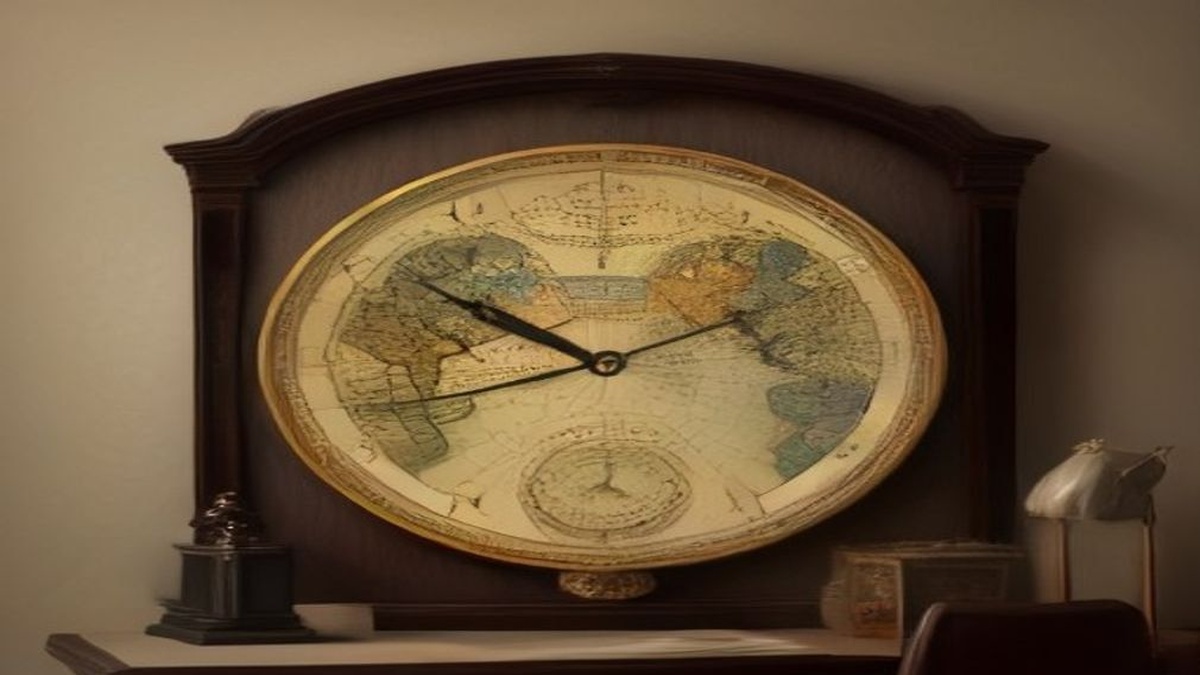
Before the late nineteenth century, every city and village across the planet maintained its own private time. Noon was simply the exact moment when the local sun stood at its highest elevation (solar transit). As railway locomotives and electric telegraph lines stitched continents together, local solar time caused catastrophic scheduling chaos and fatal train collisions. The invention of standardized time zones—first anchored to Greenwich Mean Time (GMT) and subsequently elevated to Coordinated Universal Time (UTC)—represents one of humanity’s greatest logistical triumphs.
Executive Technical Summary
- Longitudinal Geometry: The Earth rotates 360 degrees in approximately 24 hours, meaning the Sun appears to traverse exactly 15 degrees of longitude per hour (
360° / 24h = 15°/hour). - The 1884 Washington Conference: Established the Royal Observatory at Greenwich, London, as the Prime Meridian (0° longitude) and initial worldwide reference epoch.
- From GMT to UTC: While GMT is an astronomical solar time tied to Earth’s fluctuating rotation, UTC is an ultra-precise atomic standard governed by hundreds of synchronized cesium atomic clocks.
- Global Synchrony: Modern telecommunications, GPS networks, international financial trading, and cloud computing architectures depend strictly on UTC timestamps.
Table of Contents
- 1. The Era of Local Solar Chaos: Why Standard Time Was Born
- 2. Sir Sandford Fleming and the 1884 Meridian Conference
- 3. The 15-Degree Longitudinal Rule: Spherical Trigonometry of Time
- 4. The Metrological Shift: GMT vs. TAI vs. UT1 vs. UTC
- 5. Comprehensive Matrix: Major Global Time Standard Protocols
- 6. ISO 8601 Timestamp Notation in Digital Architectures
- 7. Frequently Asked Questions (FAQ)
- 8. Conclusion & The Global Unified Clock
1. The Era of Local Solar Chaos: Why Standard Time Was Born
Until the mid-19th century, clock towers in neighboring towns displayed different times. Because the Earth is spherical and continuously rotating, solar noon travels westward at roughly 1,000 miles per hour at the equator. In the United States alone, railway companies were forced to manage more than 300 conflicting local sun-times. A traveler taking a train from Boston to Washington DC had to reset their pocket watch at nearly every station depot.
The introduction of the electric telegraph and express passenger trains made this temporal anarchy intolerable. In 1853, two express trains collided on the Providence and Worcester Railroad because the conductors were operating with differing pocket watch readings, claiming 14 lives and igniting public outcry for standardized railway time.
2. Sir Sandford Fleming and the 1884 Meridian Conference
The intellectual father of worldwide time zones was Scottish-Canadian engineer Sir Sandford Fleming. After missing a train in Ireland in 1876 due to an error in a printed schedule, Fleming drafted a revolutionary proposal: dividing the entire globe into 24 standard time zones, each centered 15 degrees apart, tied to a single 24-hour universal day.
In October 1884, US President Chester A. Arthur hosted the International Meridian Conference in Washington, D.C., attended by delegates from 25 nations. By an overwhelming majority, the delegates chose the transit instrument at the Royal Observatory in Greenwich, London, as the world’s Prime Meridian (0° longitude), officially creating Greenwich Mean Time (GMT) as the international baseline.
3. The 15-Degree Longitudinal Rule: Spherical Trigonometry of Time
The mathematical architecture of time zones is tied directly to the Earth’s spherical geometry and rotational speed:
The Mathematical Breakdown:
- Full planetary rotation = 360°
- Time elapsed = 24 hours (1,440 minutes)
- Degrees traversed per hour = 360° / 24 = 15° of Longitude per 60 Minutes
- Time required to traverse 1 degree = 60 min / 15° = 4 Minutes per 1° of Longitude
Under this theoretical model, each time zone spans 7.5° east and 7.5° west of its central meridian. In practical reality, geopolitical boundaries, state lines, and national trade networks bend these theoretical zones into irregular polygons.
4. The Metrological Shift: GMT vs. TAI vs. UT1 vs. UTC
While the terms GMT and UTC are colloquially used interchangeably, modern metrology strictly differentiates between them:
Greenwich Mean Time (GMT)
An astronomical time standard based on the mean solar day calculated at the Royal Observatory in Greenwich. Because Earth’s rotation fluctuates due to lunar tidal friction and molten core movements, GMT is not perfectly uniform.
International Atomic Time (TAI – Temps Atomique International)
A pure, continuous physical timescale maintained by the BIPM in Paris. It averages the quantum ticks of over 450 ultra-precise cesium atomic clocks and hydrogen masers situated in national laboratories worldwide. TAI never adds or subtracts leap seconds.
Universal Time (UT1)
The modern astronomical successor to GMT. UT1 measures Earth’s actual rotational orientation relative to distant quasars using Very Long Baseline Interferometry (VLBI). It fluctuates constantly.
Coordinated Universal Time (UTC)
Established in 1972 as the legal civil time for the planet. UTC is tied to the ticking of atomic clocks (TAI) but is adjusted via periodic leap seconds to ensure it stays within 0.9 seconds of physical Earth rotation (UT1): |UTC - UT1| < 0.9s.
5. Comprehensive Matrix: Major Global Time Standard Protocols
| Standard | Governing Mechanism | Precision Base | Primary Application |
|---|---|---|---|
| GMT | Solar transit at Greenwich (0° meridian) | Earth orbital velocity | Historical navigation & UK winter civil time |
| TAI | 450+ synchronized atomic clocks (BIPM) | Cesium-133 hyperfine resonance | High-energy physics & astronomical research |
| UT1 | Planetary orientation vs. distant quasars | VLBI radio interferometry | Deep space tracking & satellite geodesy |
| UTC | TAI atomic ticks synchronized to UT1 | Atomic seconds with leap second adjustments | Civil law, Internet NTP, GPS reference, aviation |
6. ISO 8601 Timestamp Notation in Digital Architectures
In software engineering, distributed database replication, and internet communication, time zones are strictly formatted under the international standard ISO 8601. Dates and times are combined using the format:
2026-09-23T20:00:00+05:30 / Indian Standard Time /
2026-09-23T10:30:00-04:00 / US Eastern Daylight Time /
Adhering to unambiguous UTC timestamps avoids data corruption during financial transactions and prevents concurrency failures across global cloud servers.
7. Frequently Asked Questions (FAQ)
Q1: Why is UTC designated with the letters 'UTC' and not 'CUT' or 'TUC'?
A: English speakers wanted 'CUT' (Coordinated Universal Time), while French speakers pushed for 'TUC' (Temps Universel Coordonné). The International Telecommunication Union compromised on 'UTC', an acronym that works neutrally in all languages.
Q2: What is 'Zulu time' in military and aviation?
A: In military radio protocols, time zone 0 at the Prime Meridian is represented by the letter 'Z'. In the NATO phonetic alphabet, 'Z' is pronounced 'Zulu', making 'Zulu time' synonymous with UTC.
8. Conclusion & The Global Unified Clock
The progression from fragmented solar noon dials to Coordinated Universal Time mirrors the integration of human society. By converting Earth's spherical geometry into mathematical 15-degree zones and calibrating them against quantum atomic transitions, modern timekeeping provides the invisible, unyielding scaffolding that coordinates human civilization across land, sea, sky, and cyberspace.