TIMELEDGERS Chronometry & Calendars
Home Calendar Systems Time Zones Historical Calendars Clocks & Timekeeping Time Measurement
About Us Contact Us

Decoding the Maya Calendar: Tzolk’in, Ha’ab, the Calendar Round, and the Long Count System
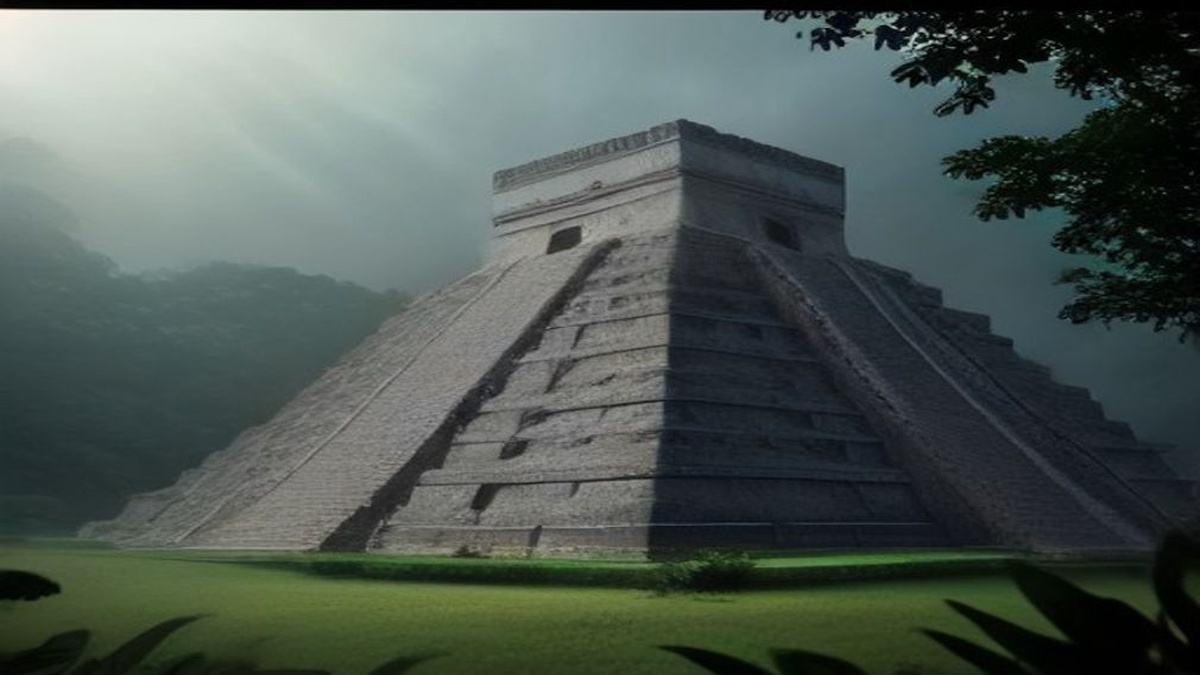
Of all the civilization-defining timekeeping systems forged by ancient humanity, none rivaled the mathematical complexity and celestial precision of the Maya. In the dense rainforests of Guatemala, southern Mexico, Honduras, and Belize, Mayan astronomer-priests developed a multi-tiered chronometric apparatus combining divine divination, solar agriculture, and linear cosmic reckoning spanning millions of years. Far from a primitive reckoning, the Maya calendar accurately tracked planetary synodic cycles—including Venus, Mars, and lunar eclipses—with a precision that matched modern atomic calculations.
The Ancient Egyptian Civil Calendar: 365 Days, Decans, and the Sothic Cycle of Sirius

Long before the Roman Empire introduced the Julian calendar or Pope Gregory XIII decreed the modern calendar grid, the astronomers of the Nile Valley engineered humanity’s first 365-day solar civil calendar. Operating without interruption for over three thousand years, the ancient Egyptian civil calendar united hydrology, agriculture, stellar astronomy, and divine mythology. At its heart lay the heliacal rising of Sirius—the brightest star in the night sky—and a grand 1,460-year astronomical wandering phenomenon known to historians as the Sothic Cycle.

The World’s Most Unusual Time Zones: 30-Minute, 45-Minute Offsets, and Political Borders

When Sir Sandford Fleming drafted his vision of international time zones in 1879, he envisioned a tidy globe partitioned into 24 pristine, uniform, one-hour slivers of exactly 15 degrees longitude each. Today’s actual time zone map looks nothing like that orderly geometric grid. Instead, it is a chaotic, labyrinthine mosaic of fractional offsets—including 30-minute and 45-minute deviations—and massive national consolidations where geography is subjugated to national sovereignty, political ideology, and historical pride.

Daylight Saving Time (DST): Origins, Energy Economics, Circadian Impacts, and Global Repeal Debates

Twice every year, hundreds of millions of people across more than 70 nations perform a biannual ritual: advancing their clocks forward by one hour in the spring (“Spring forward”) and setting them back by one hour in autumn (“Fall back”). What began in the trenches of World War I as an emergency coal-conservation tactic has evolved into one of the most fiercely debated public health and economic controversies of the modern era. As medical researchers uncover the acute cardiovascular toll of circadian misalignment, governments worldwide are reconsidering whether Daylight Saving Time (DST) has outlived its usefulness.

Navigating the International Date Line: History, Zigzags, and Island Time Leaps

Imagine standing in a place where stepping one pace to your left takes you into tomorrow, while stepping one pace to your right lands you in yesterday. This surreal chronological threshold exists physically in the middle of the Pacific Ocean along the International Date Line (IDL). Established by international consensus following the 1884 Prime Meridian Conference, this imaginary boundary resolves the profound mathematical paradox of circumnavigation, where travelers gain or lose an entire calendar day simply by traveling around the globe.

How World Time Zones Work: From Greenwich Mean Time (GMT) to Coordinated Universal Time (UTC)

Before the late nineteenth century, every city and village across the planet maintained its own private time. Noon was simply the exact moment when the local sun stood at its highest elevation (solar transit). As railway locomotives and electric telegraph lines stitched continents together, local solar time caused catastrophic scheduling chaos and fatal train collisions. The invention of standardized time zones—first anchored to Greenwich Mean Time (GMT) and subsequently elevated to Coordinated Universal Time (UTC)—represents one of humanity’s greatest logistical triumphs.

The Chinese Lunisolar Calendar: 24 Solar Terms (Jieqi), Zodiac Animals, and the 60-Year Sexagenary Cycle

The traditional Chinese calendar (known as the *Nónglì* or ‘agricultural calendar’) is one of the most intellectually sophisticated chronometrical systems ever conceived. Spanning over four millennia of uninterrupted continuous development, this lunisolar masterpiece seamlessly harmonizes the moon’s monthly waxing and waning with the Sun’s tropical orbit, while embedding an intricate metaphysical framework of Yin-Yang, the Five Elements (Wuxing), and the Twelve Zodiac Animals through the sixty-year sexagenary cycle.

The Islamic Hijri Calendar: Lunar Cycles, Crescent Sighting, and Tabular Calculations

The Islamic calendar, known formally as the Hijri calendar (At-Taqwīm al-Hijrī), stands as one of the world’s few living pure lunar calendar systems. Governing the religious life, fasting periods, and sacred pilgrimages of over 1.9 billion Muslims globally, the Hijri system operates entirely detached from the solar year. By adhering to the visible waxing crescent of the moon, it provides a fascinating study in observational astronomy, religious jurisprudence, and computational chronometry.

Gregorian vs. Julian Calendar: The Great 11-Day Shift, Papal Bull, and Leap Year Mathematics

In October 1582, millions of citizens across Catholic Europe went to sleep on Thursday, October 4, and woke up the following morning on Friday, October 15. Ten entire days had vanished into thin air by pontifical decree. This extraordinary temporal adjustment marked the birth of the Gregorian calendar—an epochal mathematical intervention that replaced Julius Caesar’s 16-century-old system and resolved an accumulated astronomical drift that threatened to sever the connection between seasonal equinoxes and Christian liturgy.

The Complete Guide to Solar, Lunar, and Lunisolar Calendar Systems: Celestial Mechanics and Cultural Mathematics

From the dawn of agriculture in the fertile river valleys of the Nile, Euphrates, and Yangtze, human civilization has relied on celestial beacons to structure societies, celebrate religious rituals, and coordinate trade. Every calendar system developed across human history represents an ingenious mathematical reconciliation between three irreconcilable astronomical cycles: the diurnal rotation of the Earth, the monthly orbital phase of the Moon, and the annual revolution of our planet around the Sun. Understanding solar, lunar, and lunisolar frameworks unlocks the profound story of how humanity domesticated time itself.